EDITORIAL
(by Ghanatta Ayaric)
Documenting aspects of Bulsa culture, society, and history for the Bulsa people, as well as for people interested in the Bulsa, and posterity, has been the mission of the Buluk journal. Additionally, reporting on notable events and news within and beyond Bulsaland is a key focus.
To date, the journal has published considerable information on Bulsa social structure, religion, history, material culture, customary practices, food, health, and more. In the EVENTS and NEWS column, which has become an integral part of each edition, happenings and news in and about Bulsaland have also received significant coverage.
At this point, it is appropriate to acknowledge Dr. Franz Kröger. Without his dedication to the Bulsa, Buluk would not have endured over time. His numerous publications on the Bulsa, including the Buli/English dictionary and a book on Bulsa Rites of Passage, are unparalleled in their value as documents and preservers of the Buli language and cultural traditions. Despite the physical limitations of aging, Kröger, at 88, still puts in as much effort as he can in the journal. Nonetheless, responsibility for a good chunk of work now rests on the shoulders of Ghanatta Ayaric, with whom Kröger started the journal in 1999. He’ll be assisted by John Akanvariyuei Agandin, who joined the editorial board when Ghanatta’s three-year sojourn in Brazil (at the German International School, Rio de Janeiro) made it impossible for him to be as active as he would have wished to be. A familiar name, Kwesi Amoak, joins the journal as co-editor. The Mellon PhD candidate at the African Studies (IAS), University of Ghana, and visiting postgraduate researcher at the University of Edinburgh’s Moray House School of Education and Sport, is the Director of Alumni Engagement & Storyteller in Residence at the Africa-America Institute (AAI), a 72-year old New York based non-profit organization that bridges Africa and its diaspora through education. Kwesi Amoak has been a recipient of two Wellcome Trust small grant awards through University of Oxford’s Health Systems Collaborative and the Decolonisation and Global Health Research Exchange network for his research on the ethics of indigenous healing and intellectual property rights among the Bulsa. And as part of his anthropological research on creativity in education, he recently completed a blacksmithing apprenticeship in Wiaga-Chiok in the Bulsa North Municipality. He’s also an awardee of the Gurus and Griot Fellowship, an academic accelerator program at the IE University in Madrid, Spain. As a published writer and a Bulsa deeply interested in Bulsa culture and society, his role as Buluk co-editor will be of immense benefit. In the interim, Kröger will continue to guide us as we take more responsibility for the publication of Buluk 15 and subsequent editions.
The efforts of authors who have contributed articles, news items, and pictures over the years are hereby also acknowledged with much appreciation. We pay informal tribute here to Evans Akangyelewon Atuick, who, until his sudden passing away on July 20, 2024, was a dependable contributor, authoring such insightful articles as Bulsa Final Funeral Rites (Buluk 13), Tradition and Change in the Bulsa Marriage Process (Buluk 6). He also kept the journal’s readership, including soccer fans, abreast of the activities of his beloved club, FC Wiaga United.
This new edition of the journal was initially planned for 2023. However, circumstances beyond our control made that impossible. We wish to apologize for the delay. Better late than never, as the saying goes.
The current edition covers, among other topics, the Bulsa and their political units, as well as animals and their benefits for the Bulsa, who, in the majority, engage in crop and livestock farming for a living. Three Educated Bulsa Generations attempts a close look at the first products of formal education, particularly those who have had a tremendous influence on the second and third generations.
Kwesi Amoak’s biographical portrait of Dr. Kröger offers readers insights into the early life of Buluk’s chief editor and the beginning of his social anthropological work among the Bulsa.
Agandin and Akan-mwanatechaab spice Buluk 15 with their poems.
News and Events is, as usual, a potpourri that highlights diverse happenings in Bulsaland. In the obituary column, we announce the deaths of Bulsa people since Buluk 14. May their souls rest in peace.
Buluk 15 will be primarily available online, but we will endeavour to print some hard copies for distribution to libraries and a few individuals.
Enjoy your reading.
Editorial Notes by Franz Kröger
For some years now, I have been thinking about the future of our Buluk magazine once I am no longer able to contribute. I am therefore extremely pleased to have found successors who have been deeply involved in editing the magazine for many years—over 25 years in Ghanatta’s case!—and who have consistently demonstrated exceptional capability, creativity, and reliability.
Ghanatta has been a co-editor since the very first edition and has enriched most issues with his essays, short stories, historical research, obituaries, and poems. Throughout all these years, our collaboration has been fruitful and entirely conflict-free. I extend my heartfelt thanks to him.
John Agandin has been contributing essays, short stories, poems, and reports on important events (Feok, BHCS exhibitions, etc.) to Buluk since 2016 (issue no. 9). His articles have significantly contributed to the magazine’s success. We have also worked together successfully in the Bulsa Heritage and Cultural Society, with John taking on most of the responsibilities. Thank you very much for everything, John.
Both new contributors have an excellent command of English and have kindly proofread my own contributions. Neither has ever asked for a fee, and I hope all authors and contributors will continue to work on a voluntary basis.
Kwesi (to be added)
I would also like to take this opportunity to thank another contributor who has never been mentioned by name before: my great-nephew, Dr. rer. nat. Dominik Baier of the University of Paderborn. He has managed the technical aspects of our journal for years, and I am delighted that he will continue to support the new editors with his outstanding expertise in computer science.
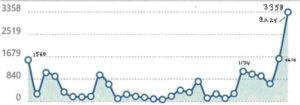
Visitors day to the Buluk Website per day
Farewell to My Editorial Role
Looking back, I believe the publication of the journal has been a great success, as evidenced by the large readership and the keen interest shown. Since our technical advisor, Dr. Dominik Baier, installed a new and significantly improved version of the WordPress platform in February 2025, the homepage now displays not only the number of visitors but also how many individuals have viewed each article. I was personally surprised to see that the daily number of visitors often exceeded 1,000, with a peak of 3,358 on November 9, 2025 (see diagram).
Even more important than the quantity of readers is the value our content provides. While all feedback has been appreciative and commendatory, we would have welcomed some critical voices as well. What aspects of our concept could be improved? Which articles are less well received? What errors in content or form have been noticed?
Of the appreciative comments, I will quote just two:
Aurelia:
How I am so happy I found your site! I really found you by accident while researching something else on Bing. Anyways, I’m here now and just want to say cheers for a fantastic post and an all-round enjoyable blog (I also love the theme/design). I don’t have time to go through it all right now, but I’ve bookmarked it and added your RSS feeds. I’ll be back to read much more. Please keep up the excellent work.
Soulja:
I constantly emailed this website post page to all my contacts, since if I like to read it, my contacts will too.
These quotes not only praise the editors and authors but also highlight that many potential readers still lack easy access to our Buluk journal. Some discover it by chance while browsing search engines, while others hear about it through friends.
Perhaps Radio Bulsa could help promote the journal—either through a dedicated programme or eventually via a Bulsa daily or weekly newspaper.
I wish our magazine a long and vibrant future, with ever-growing visitor numbers and a deeply satisfied readership.
- Editors and Copyrights
- Editorial
- Two Sons of Buluk ordained in Wiaga to the Catholic Priesthood
- Bulsa schoolgirls sew sanitary pads
- Margaret Akanbang – The Mother of Doctors
- Animals, a Benefit for the Bulsa
- Events
- Elections 2024
- Joseph Aduedem: Gbanta Bogka – A Journey into Bulsa Divination Practices
- Obituaries
- Darius Adjong’s PhD thesis
- A German Anthropologist among the Bulsa: A Biographical Conversation
- POEMS
- MAIN FEATURE: BULUK OVER THE LAST HUNDRED YEARS